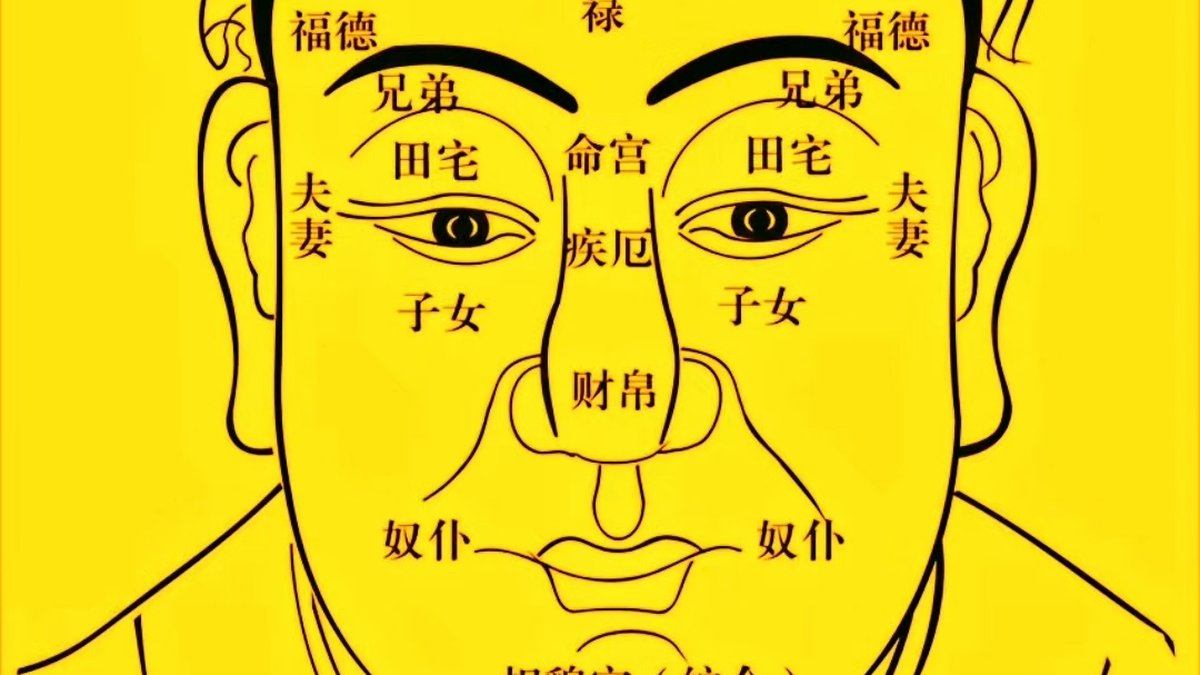
Look, I know how this sounds. "Face reading." Like something a fortune teller at a carnival does for five bucks. But here's the thing — Mian Xiang (面相) isn't some sideshow act. It's a 2,000-year-old system that was used by emperors to choose ministers, by generals to assess soldiers, and by regular people to make marriage decisions.
And honestly? Once you learn the basics, you'll never look at faces the same way again. You'll catch yourself analyzing your boss's nose during meetings. Fair warning.
The core idea behind Mian Xiang is simple: your face isn't random. Every feature — the width of your forehead, the shape of your nose, the set of your eyes — reflects something about your nature and your path through life. Not in a "big nose means rich" way (it's way more subtle than that). But in a way that treats your face as a living map of your personality, your past, and your potential future.
Ancient Chinese texts like the "Shen Xiang Quan Bian" (Complete Guide to Spirit Physiognomy) go ridiculously deep on this stuff. Thousands of pages analyzing every millimeter of facial structure. These weren't casual observations — they were systematic studies based on generations of recorded cases. Real people with real outcomes, tracked over decades.
What makes Mian Xiang different from Western physiognomy (which, to be fair, had some really questionable moments) is that it's integrated with the whole Chinese metaphysical system. Your face reading connects to your Bazi chart. It connects to your Five Elements balance. It's one piece of a much bigger puzzle — not a standalone party trick.
Here's the first thing you learn in Mian Xiang: the face divides into three horizontal zones, and each one covers roughly a third of your life. Your face literally maps your timeline from top to bottom.
Upper Zone — Forehead (Ages 15-30). Your forehead represents your early life. Parents. Education. The foundation you got (or didn't get). A broad, smooth forehead suggests a good start — supportive family, solid opportunities, clear direction. A narrow or uneven forehead can indicate struggles in youth or a harder path to finding your footing.
There's a specific spot between your eyebrows called Yin Tang (印堂) — the "seal hall." If this area is smooth and open, you're good. If it's furrowed even slightly, you carry worry. If there's a vertical line between the brows, that's called a "suspension needle" in Mian Xiang — associated with overthinking and internal pressure. (I have one of these. It definitely checks out.)
Middle Zone — Eyes, Nose, Cheeks (Ages 31-50). This is your prime. Career. Marriage. Money. The middle zone is where the action is. Your nose is the "wealth star" — not because a big nose literally means you're rich, but because the nose represents your ability to accumulate and manage resources. A straight nose bridge with a defined tip suggests financial stability. A crooked or weak bridge can point to money coming and going in unpredictable waves.
Your eyes are about judgment and wisdom. Clear, bright eyes — not just physically, but in terms of their "shen" or spirit — indicate good decision-making ability. Cloudy or unfocused eyes can suggest confusion or poor judgment in important matters. The eyes change day to day, person to person. That's normal. The pattern over time is what counts.
Lower Zone — Mouth, Chin, Jaw (Ages 51+). This is retirement. Legacy. How things wrap up. A strong, forward-set chin suggests resilience and the ability to finish what you start. A weak or receding chin can indicate difficulty in later years — not necessarily poverty, but a sense of things trailing off rather than concluding with strength.
The mouth relates to how you communicate and receive from others. Upturned corners? Natural optimism. Downturned? More serious, possibly harder to satisfy. Neither is "bad" — they're just data points. The question is whether those tendencies serve you or hold you back.
Mian Xiang has a thing called the "Five Officers" (五官). These are the five most important facial features, each governing a different life domain:
Eyebrows — The Longevity Officer. Your eyebrows show your relationships with siblings and people your own age. Thick, well-shaped brows suggest strong social bonds. Sparse or uneven brows can indicate more solitary tendencies. The gap between your eyebrows — that Yin Tang area again — lives here too. Wide gap? Open-minded. Narrow gap? More focused, possibly more intense.
Eyes — The Inspection Officer. Eyes are the most important feature in Mian Xiang. They show your wisdom, your judgment, your inner spirit. In Chinese face reading, you can have challenging features everywhere else, but if your eyes are clear and steady, you'll be okay. The eyes overrule everything. Phoenix eyes (slightly upturned at outer corners) suggest artistic sensitivity. Dragon eyes (rounder, stronger gaze) suggest authority and leadership. Neither is better. They're just different operating systems.
Nose — The Wealth Officer. The nose isn't just about money. It's about your self-esteem. Your sense of personal value. If your nose is strong and centered, you have a solid sense of who you are. A nose that deviates or has an unusual shape can suggest identity struggles or inconsistent self-worth. The tip specifically relates to wealth accumulation around age 42-48. Rounded and fleshy at the tip? Saving comes naturally. Pointed and bony? Money flows out as fast as it comes in — you need systems to manage it.
Mouth — The Communication Officer. The mouth is about expression. Giving and receiving. Clear lip borders suggest clarity in communication. A mouth that's always slightly open? You might share too freely. Tightly closed? Guarded, possibly secretive. The corners are especially telling — natural upturn is baseline optimism, downturn is a more critical nature. The mouth shows how you connect to others and how others receive what you put out.
Ears — The Listening Officer. Ears represent early childhood (ages 1-14) and how you receive information. Large, well-defined ears suggest a good foundation and the ability to listen well. Small or flat ears against the head can indicate less natural receptivity. Ears set higher than your eyebrows? Fast thinker, often ahead of peers intellectually. Ears set lower than your eyes? Process things more slowly but often more thoroughly. Speed isn't everything.
Grab a mirror. Here's what to look for — and don't stress about what you find. This is data, not a verdict:
1. Forehead: Smooth or lined? Wide or narrow? This is your foundation story.
2. Yin Tang (between brows): Any furrow there? Even slight? That's your worry meter.
3. Eyes: Bright and clear, or tired? This changes daily — your current state shows here.
4. Nose bridge: Straight or has a bump? The straighter, the more consistent your life path tends to be.
5. Mouth corners: Natural up or down? Check when your face is totally relaxed.
6. Chin: Strong and forward, or softer? Your finishing power and resilience.
Mian Xiang isn't about "good" vs "bad" features. It's about understanding your natural tendencies. If your nose says money flows out fast, cool — now you know you need a budget. If your Yin Tang is furrowed, that's a signal to address stress. The face doesn't judge you. It just shows what's going on. Face reading works best combined with other methods — Bazi, Ziwei, palm reading. They all tell pieces of the same story. Your face is just the most visible piece.
Five legendary masters. Three ancient arts. One complete reading. Completely free.
Get Your Free Destiny Reading