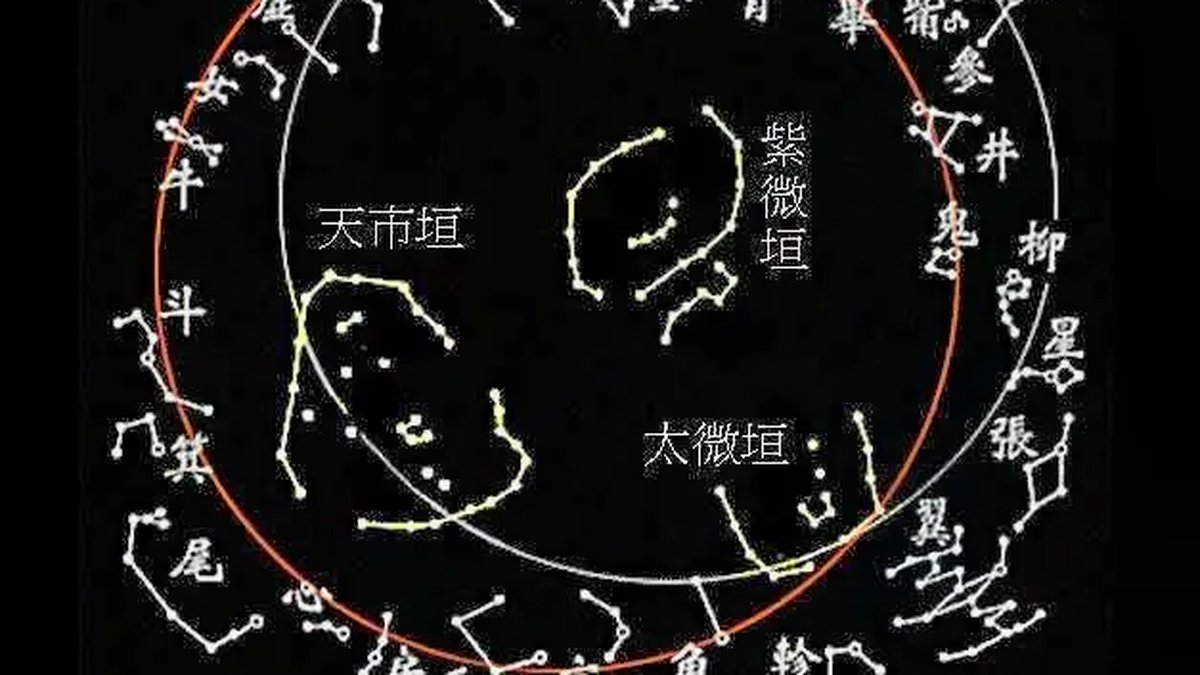
Western astrology and Chinese metaphysics both seek to map the relationship between cosmic patterns and human destiny, but they approach this task from fundamentally different philosophical foundations. Western astrology traces its roots to Babylonian and Hellenistic traditions that emphasized the celestial sphere as a divine clockwork — planets moving through zodiac signs in mathematically predictable patterns. The birth chart is a snapshot of the sky at the moment of your first breath.\n\nChinese metaphysics, by contrast, emerged from a worldview centered on qi — the vital energy that flows through all things. Rather than mapping planetary positions against zodiac constellations, systems like Bazi map the flow of elemental energies through time. Your birth chart is not a snapshot of the sky but a reading of the cosmic weather at your moment of entry into the world.
Western astrology operates on linear time. A natal chart is cast once and interpreted as a fixed blueprint. Transits and progressions describe how current planetary positions interact with that fixed blueprint. The chart itself does not change.\n\nChinese metaphysics operates on cyclical time. The Bazi chart is only the starting point. Your Decennial Fortune Cycles and Annual Luck pillars describe how the cosmic weather changes throughout your life. The same person at age twenty and age forty operates under fundamentally different elemental influences. Chinese systems do not just describe who you are — they describe who you are BECOMING across every phase of your life.\n\nThis cyclical view means that 'negative' readings are never final. A difficult decade is followed by a different decade. Winter is followed by spring. The practical implication: Chinese metaphysics is inherently more optimistic about change than its Western counterparts.
Western systems use four elements: Fire, Earth, Air, Water. Chinese systems use five: Wood, Fire, Earth, Metal, Water. The addition of Metal and the replacement of Air with Wood reflect fundamentally different cosmological assumptions. Western elements describe substances; Chinese elements describe processes. Wood does not just mean trees — it means growth, expansion, the springtime impulse. Metal does not just mean minerals — it means contraction, precision, the autumn harvest.\n\nThe Five Elements interact through two cycles — generation and control — creating a dynamic system where every element both nurtures and restrains every other element. This dual-cycle system produces far more nuanced analyses than the simpler Western elemental framework. A Bazi reading can pinpoint exactly which element is too strong, which is too weak, and when the balance will shift.
The question is not which system is better but which question each system answers best. Western astrology excels at psychological profiling and understanding relationship dynamics through synastry. Chinese metaphysics excels at timing questions — when to act, when to wait, when to invest, when to retreat.\n\nAt Tianling Pavilion, we use three Chinese systems simultaneously — Ziwei for life structure, Bazi for elemental timing, Qimen for strategic action — and cross-validate them through the Scribe's synthesis. This triangulation produces readings of remarkable reliability because each system provides an independent check on the others.
Five legendary masters. Three ancient arts. One complete reading. Completely free.
Get Your Free Destiny Reading